
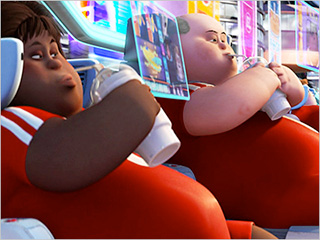
A great article in reference to our discussion in class this week ... as tech gets better, will society get worse? "Technological evolution has a different motive force. It is self-evolution, and it is therefore driven by what we want as opposed to what is adaptive. In a market economy, it is even more complex: for most of us, our technological identities are determined by what companies decide to sell based on what they believe we, as consumers, will pay for. As a species, we often aren’t much different from [indigenous communities]. Comfort-seeking missiles, we spend the most to minimize pain and maximize pleasure. When it comes to technologies, we mainly want to make things easy. Not to be bored. Oh, and maybe to look a bit younger. Our will-to-comfort, combined with our technological powers, creates a stark possibility. If we’re not careful, our technological evolution will take us toward not a singularity but a sofalarity. That’s a future defined not by an evolution toward superintelligence but by the absence of discomforts. The sofalarity (pictured memorably in the film “Wall-E”) is not inevitable either. But the prospect of it makes clear that, as a species, we need mechanisms to keep humanity on track. The technology industry, which does so much to define us, has a duty to cater to our more complete selves rather than just our narrow interests. It has both the opportunity and the means to reach for something higher."
Beyond Sofalarity

Posted by Tapan Parikh
on February 27, 2014
Community Reflections
Share your thoughts, experiences, or questions